
 Image 1 of 1
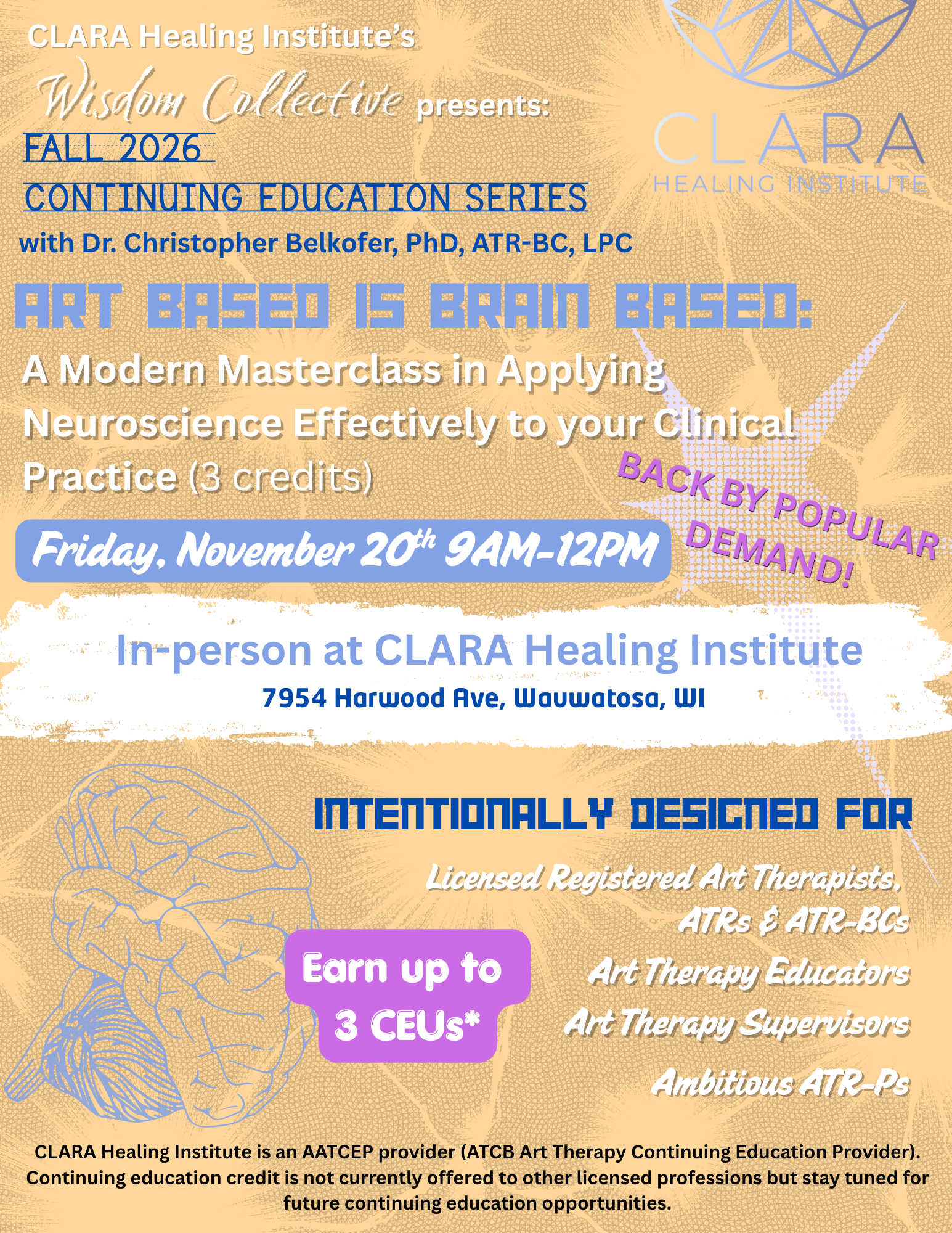
Missed registration in September? BACK BY POPULAR DEMAND! CLARA is offering another round of Dr. Belkofer’s highly acclaimed course!
Neuroscience continues to shape the future of mental health treatment, offering exciting opportunities to better understand the felt sense of emotions, attachment, trauma, memory, creativity, and healing. Yet for many practitioners, neuroscience can feel overly technical, jargon-heavy, or disconnected from the relational heart of therapy. Many art therapists feel that their training only glossed over neuroscience, and see the need for updated conceptual frameworks and brain-based interventions. Additionally, art therapists want to ensure that they can translate this learning directly to their clients in a meaningful and effective way, while still keeping the creative process at the center of their practice.
In this course, Dr. Christopher Belkofer, PhD, ATR-BC, LPC will draw from 20 years of clinical work, his seminal research in art therapy using quantitative EEG measures, and 17 years of training graduate students with neuroscience principles at the core of their practice. The course is designed for art therapists across all stages of professional development, from ATR-Ps building confidence in early clinical work to seasoned clinicians, supervisors, and art therapy educators seeking to strengthen their neuroscience-informed practice. Whether participants are looking to deepen clinical effectiveness, refresh outdated training, or expand their therapeutic framework, this course offers practical and accessible applications of contemporary neuroscience within art therapy.
Participants will leave with increased confidence in applying neuroscience-informed thinking to treatment planning, goal development, case conceptualization, and intervention design. By integrating contemporary neuroscience with art-based clinical practice, attendees will strengthen their ability to support clients with greater intentionality, insight, and effectiveness. The course emphasizes practical integration rather than theory alone, helping clinicians translate current brain-based research into meaningful, relationship-centered art therapy interventions.
Missed registration in September? BACK BY POPULAR DEMAND! CLARA is offering another round of Dr. Belkofer’s highly acclaimed course!
Neuroscience continues to shape the future of mental health treatment, offering exciting opportunities to better understand the felt sense of emotions, attachment, trauma, memory, creativity, and healing. Yet for many practitioners, neuroscience can feel overly technical, jargon-heavy, or disconnected from the relational heart of therapy. Many art therapists feel that their training only glossed over neuroscience, and see the need for updated conceptual frameworks and brain-based interventions. Additionally, art therapists want to ensure that they can translate this learning directly to their clients in a meaningful and effective way, while still keeping the creative process at the center of their practice.
In this course, Dr. Christopher Belkofer, PhD, ATR-BC, LPC will draw from 20 years of clinical work, his seminal research in art therapy using quantitative EEG measures, and 17 years of training graduate students with neuroscience principles at the core of their practice. The course is designed for art therapists across all stages of professional development, from ATR-Ps building confidence in early clinical work to seasoned clinicians, supervisors, and art therapy educators seeking to strengthen their neuroscience-informed practice. Whether participants are looking to deepen clinical effectiveness, refresh outdated training, or expand their therapeutic framework, this course offers practical and accessible applications of contemporary neuroscience within art therapy.
Participants will leave with increased confidence in applying neuroscience-informed thinking to treatment planning, goal development, case conceptualization, and intervention design. By integrating contemporary neuroscience with art-based clinical practice, attendees will strengthen their ability to support clients with greater intentionality, insight, and effectiveness. The course emphasizes practical integration rather than theory alone, helping clinicians translate current brain-based research into meaningful, relationship-centered art therapy interventions.